
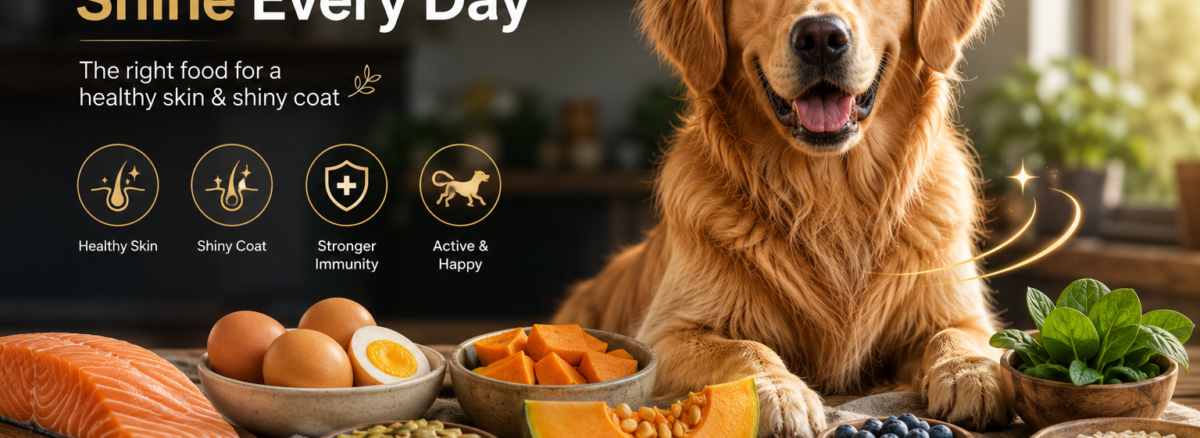
Best Foods for Healthy Skin and Coat in Dogs: A Complete Nutrition Guide
Every dog owner loves seeing their pet with a soft, shiny coat and healthy skin. Beyond appearance, a healthy coat is often a reflection of your dog’s overall health and nutritional status. If your dog has a dull coat, dry skin, or excessive shedding, diet could be one of the contributing factors.
Providing the best foods for healthy skin and coat in dogs is one of the most effective ways to support long-term skin health. Essential nutrients such as high-quality protein, Omega fatty acids, vitamins, and minerals help nourish the skin, strengthen hair follicles, and promote a naturally healthy coat.
In this guide, you’ll learn which foods are beneficial for healthy skin and coat in dogs, the nutrients they provide, and how to build a balanced diet that supports your dog’s overall well-being.
Why Nutrition Matters for Your Dog’s Skin and Coat
Your dog’s skin is the body’s largest organ and serves as the first line of defense against environmental irritants, bacteria, and parasites. Hair follicles continuously require nutrients to produce strong, healthy hair.
A diet lacking essential nutrients may contribute to:
- Dull or rough coat
- Dry or flaky skin
- Excessive shedding
- Weak hair growth
- Brittle fur
- Reduced skin barrier function
Balanced nutrition helps maintain healthy skin, supports normal hair growth, and contributes to a naturally shiny coat.
Essential Nutrients for Healthy Skin and Coat
Before discussing specific foods, it’s important to understand the nutrients responsible for dog skin and coat health.
1. High-Quality Protein
Hair is primarily made of keratin, a protein that requires adequate dietary protein for healthy growth.
Good protein sources include:
- Chicken
- Turkey
- Eggs
- Fish
- Lamb
Protein supports:
- Hair follicle development
- Muscle maintenance
- Skin repair
- Healthy coat growth
2. Omega 3 Fatty Acids
Omega 3 fatty acids help maintain healthy skin and support a soft, shiny coat.
Benefits include:
- Supports skin hydration
- Helps maintain coat shine
- Supports normal inflammatory response
- Promotes healthy skin function
Natural sources:
- Salmon
- Sardines
- Mackerel
- Fish oil
3. Omega 6 Fatty Acids
Omega 6 helps maintain the skin’s natural protective barrier and supports coat quality.
Food sources include:
- Chicken fat
- Sunflower oil
- Poultry
Benefits:
- Healthy skin barrier
- Coat softness
- Skin moisture
- Hair follicle nourishment
4. Omega 9 Fatty Acids
Although dogs can produce Omega 9 naturally, dietary sources help complement the balance of healthy fats.
Benefits include:
- Supports skin nourishment
- Helps maintain healthy coat texture
- Contributes to overall skin wellness
Sources:
- Olive oil
- Certain vegetable oils
5. Biotin
Biotin is an important B vitamin that supports keratin production, helping maintain healthy skin and hair.
Natural sources:
- Eggs
- Liver
- Fish
Benefits:
- Supports healthy hair growth
- Maintains skin health
- Strengthens coat quality
6. Zinc
Zinc supports normal skin repair and healthy hair follicle function.
Sources:
- Beef
- Lamb
- Chicken
- Pumpkin seeds
Benefits:
- Supports skin integrity
- Maintains healthy coat
- Helps nourish hair follicles
7. Vitamins A, D and E
These vitamins support normal skin function and help maintain overall skin and coat condition.
Sources:
- Carrots
- Pumpkin
- Fish
- Eggs
- Liver
Best Foods for Healthy Skin and Coat in Dogs
Salmon
Salmon is one of the richest natural sources of Omega 3 fatty acids.
Benefits:
- Supports healthy skin
- Helps maintain coat shine
- Promotes healthy skin function
Sardines
Sardines provide Omega 3, protein, vitamin D, and essential minerals.
Benefits:
- Supports skin nourishment
- Helps maintain coat quality
- Rich source of healthy fats
Eggs
Eggs are an excellent source of protein and biotin.
Benefits:
- Supports keratin production
- Promotes healthy hair growth
- Helps maintain healthy skin
Chicken
Chicken provides highly digestible protein that supports hair growth and muscle development.
Benefits:
- Healthy coat growth
- Supports skin repair
- Excellent protein source
Pumpkin
Pumpkin contains vitamins A and E along with antioxidants that contribute to healthy skin.
Benefits:
- Supports skin health
- Helps maintain coat condition
- Provides dietary fibre
Sweet Potato
Sweet potatoes are rich in beta-carotene and vitamin A.
Benefits:
- Supports healthy skin
- Promotes coat quality
- Rich in antioxidants
Flaxseed
Flaxseed is a plant-based source of Omega fatty acids.
Benefits:
- Supports skin hydration
- Helps maintain coat softness
Coconut Oil (In Moderation)
Some veterinarians may recommend coconut oil in limited amounts depending on your dog’s dietary needs.
Benefits:
- Supports skin moisture
- Helps maintain coat appearance
Always consult your veterinarian before making dietary changes or introducing new foods.
Foods That May Negatively Affect Your Dog’s Skin and Coat
A nutritious diet is essential, but certain foods or dietary imbalances may contribute to poor skin and coat condition. Avoid feeding your dog foods that are unsafe or unsuitable.
Foods to Avoid
- Chocolate
- Grapes and raisins
- Onions and garlic
- Xylitol (artificial sweetener)
- Excessively fatty or fried foods
- Excess salt
- Alcohol
- Caffeine
Even foods that are safe in moderation should be introduced carefully and under veterinary guidance if your dog has allergies or digestive sensitivities.
How Hydration Supports Healthy Skin
Water is often overlooked when discussing healthy skin and coat for dogs, yet it plays an essential role in maintaining skin elasticity and supporting normal skin function.
A well-hydrated dog is more likely to maintain:
- Healthy skin moisture
- Better coat texture
- Normal skin barrier function
- Overall wellness
Always provide clean, fresh drinking water throughout the day.
Daily Feeding Tips for Healthy Skin and Coat
Good nutrition isn’t just about choosing the right ingredients—it’s also about consistency.
Follow these simple tips:
- Feed a complete and balanced diet appropriate for your dog’s life stage.
- Include high-quality protein in every meal.
- Provide healthy sources of Omega fatty acids.
- Avoid frequent changes in diet unless recommended by your veterinarian.
- Maintain your dog’s ideal body weight.
- Ensure access to fresh drinking water at all times.
- Schedule regular veterinary health check-ups.
Common Nutritional Mistakes Dog Owners Make
Many skin and coat problems can be linked to everyday feeding mistakes.
Feeding an Unbalanced Homemade Diet
Homemade meals without proper nutritional planning may lack essential fatty acids, vitamins, and minerals.
Low Protein Intake
Protein is necessary for healthy hair growth and maintaining skin structure.
Ignoring Essential Fatty Acids
Omega 3, Omega 6, and Omega 9 fatty acids play an important role in supporting skin hydration and coat quality.
Overfeeding Treats
Excess treats can dilute the nutritional value of your dog’s main diet and contribute to weight gain.
Not Addressing Nutritional Deficiencies
Persistent dull coat, excessive shedding, or dry skin may sometimes indicate nutritional gaps that should be assessed by a veterinarian.
When Should You Consider Nutritional Support?
Most healthy dogs receive adequate nutrition from a complete and balanced diet. However, some dogs may benefit from additional nutritional support when advised by a veterinarian.
Examples include:
- Dogs with excessive seasonal shedding
- Dogs with dull or dry coats
- Dogs recovering from skin conditions
- Senior dogs
- Dogs with increased nutritional requirements
- Dogs with poor coat quality despite a balanced diet
Nutritional support should always complement—not replace—a healthy diet and veterinary care.
How Star Coat Supports Skin and Coat Health
When your veterinarian recommends additional nutritional support, a balanced skin and coat supplement may help maintain healthy skin and coat condition.
Star Coat for Dogs is formulated with:
- Omega 3, 6 & 9 Fatty Acids
- Biotin
- Zinc
- Essential Vitamins
- Essential Minerals
These nutrients work together to:
- Support healthy skin
- Help maintain a naturally shiny coat
- Nourish hair follicles
- Support normal skin hydration
- Promote overall skin and coat wellness
Explore the product here:
Star Coat Skin & Coat Tonic for Dogs
Veterinary Advice
If your dog experiences persistent hair loss, excessive scratching, bald patches, redness, skin infections, or ongoing shedding, consult your veterinarian for a proper diagnosis.
Skin and coat issues may result from allergies, parasites, hormonal disorders, infections, or nutritional deficiencies. Early diagnosis helps ensure the most appropriate treatment and care.
Conclusion
A healthy, shiny coat starts with proper nutrition. Feeding the best foods for healthy skin and coat in dogs helps provide the essential nutrients needed to support healthy skin, nourish hair follicles, and maintain coat quality.
Along with a balanced diet, regular grooming, adequate hydration, parasite prevention, and routine veterinary care all contribute to long-term skin and coat wellness.
When additional nutritional support is recommended, products containing Omega 3, 6 & 9 fatty acids, Biotin, Zinc, vitamins, and minerals can help complement your dog’s daily nutrition. Formulations such as Star Coat are designed to provide these essential nutrients in balanced proportions to support healthy skin and a naturally shiny coat.