
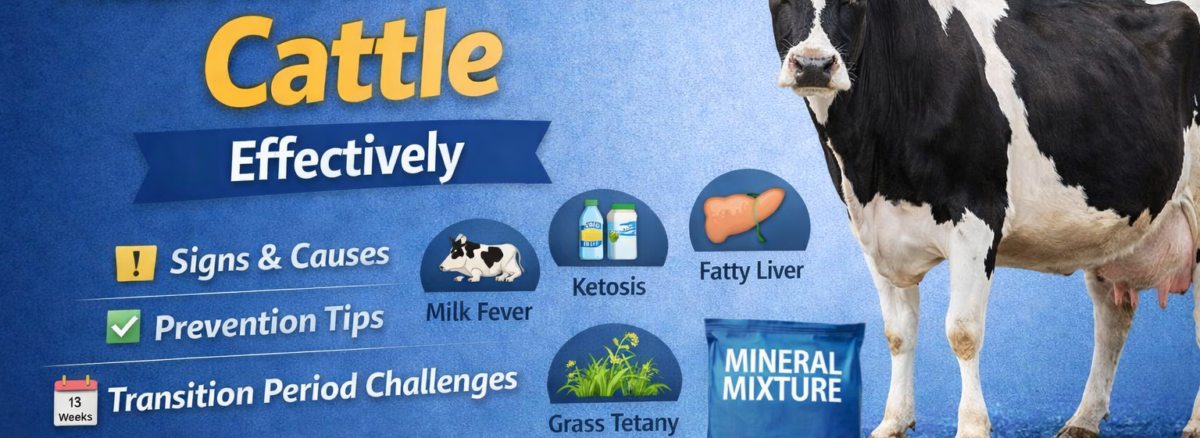
Metabolic disorders are common problems in dairy cattle, especially in high milk–producing animals. These diseases are not caused by bacteria or viruses. They happen when the cow’s body cannot properly manage nutrients like energy, calcium, and minerals during important stages such as late pregnancy and early lactation.
In simple words, when the cow’s body demand is very high but the nutrition supply is not balanced, metabolic disorders occur.
The most risky time is called the transition period, which means 3 weeks before calving and 3 weeks after calving. During this time, the cow undergoes major physical and hormonal changes. Milk production suddenly increases after calving, and the body struggles to adjust.
Let us understand the major metabolic disorders in a simple way.
-
1. Milk Fever (Calcium Deficiency)
Milk fever usually occurs within 2–3 days after calving. When milk production starts, a large amount of calcium goes into the milk. If the cow cannot supply enough calcium into the blood, she becomes weak..
Signs:
- Cow unable to stand (downer cow)
- Cold ears and legs
- Muscle trembling
- Loss of appetite
- Head turned towards flank
- If not treated immediately, the cow may die.
Prevention:
- Do not feed too much calcium during the dry period.
- Provide proper mineral mixture.
- Give oral calcium gel immediately after calving.
- Ensure balanced feeding during late pregnancy.
Prevention is always cheaper than treatment. A small investment in minerals can save a valuable animal.
-
2. Ketosis (Energy Deficiency)
Ketosis occurs when the cow does not eat enough but produces high milk. The body starts breaking stored fat to produce energy. Excess fat breakdown produces ketone bodies, which affect health.
Signs:
- Reduced milk yield
- Decreased appetite
- Weight loss
- Dull appearance
- Sweet smell from breath (sometimes)
Ketosis reduces milk production and fertility.
Prevention:
- Provide energy-rich feed before and after calving.
- Avoid sudden feed changes.
- Maintain proper body condition (not too fat before calving).
- Provide good quality concentrate and green fodder.
Cows that are too fat before calving have a higher risk of ketosis.
-
3. Fatty Liver
Fatty liver is closely related to ketosis. When too much body fat is mobilized, it accumulates in the liver. The liver cannot function properly.
Signs:
- Poor appetite
- Weakness
- Reduced milk
- Frequent illness
Prevention:
- Proper dry cow feeding.
- Avoid over-conditioning.
- Maintain balanced ration.
- Provide liver-support supplements if required.
Good transition management prevents fatty liver problems.
-
4. Grass Tetany (Magnesium Deficiency)
This problem mainly occurs in animals grazing on lush green pastures. Young grass contains low magnesium, and sudden deficiency causes nervous symptoms.
Signs:
- Nervousness
- Muscle twitching
- Stiff walking
- Sudden collapse
- Convulsions
- It can lead to sudden death if untreated.
Prevention:
- Provide mineral mixture containing magnesium.
- Avoid exclusive grazing on lush pasture.
- Supplement magnesium in feed.
Regular mineral supplementation is very important for grazing animals.
-
5. Acidosis (Rumen Disorder)
Acidosis occurs when cows are fed excessive concentrate and less roughage. This reduces rumen pH and affects digestion.
Signs:
- Loose dung
- Reduced rumination
- Bloating
- Reduced milk fat
- Lameness in severe cases
- High milk cows need concentrate, but fiber is equally important.
Prevention:
- Provide sufficient dry fodder.
- Avoid sudden increase in concentrate.
- Introduce feed changes gradually.
- Ensure proper fiber in ration.
Healthy rumen means healthy cow.
-
Importance of Mineral Mixture
Many metabolic disorders are caused by mineral imbalance. A good mineral mixture should contain:
- Calcium
- Phosphorus
- Magnesium
- Trace minerals (Zinc, Copper, Manganese)
- Vitamins A, D3, and E
Daily mineral supplementation improves:
- Milk yield
- Fertility
- Immunity
- Calf health
Skipping mineral mixture to save money may lead to bigger losses later.
-
Why Transition Period Management Is Critical
The transition period is the most sensitive stage. During this time:
- Appetite decreases.
- Nutrient demand increases.
- Hormonal changes occur.
Farmers should give special care:
- Provide balanced ration.
- Ensure clean drinking water.
- Keep housing clean and comfortable.
- Reduce stress.
- Observe animals daily.
Early detection of problems saves treatment cost and prevents production loss.
-
Simple Daily Observation Checklist
Farmers should check:
- Is the cow eating normally?
- Is rumination regular?
- Is milk yield normal?
- Is she standing comfortably?
- Is dung consistency normal?
Any abnormal sign should be reported to a veterinarian immediately.
-
Economic Importance
Metabolic disorders reduce:
- Milk production
- Fertility
- Growth of calves
- Overall farm profit
They increase:
- Veterinary expenses
- Culling rate
- Loss of valuable animals
Proper nutrition and management increase profitability and animal longevity.
-
Golden Rules for Farmers
- Never change feed suddenly.
- Maintain ideal body condition score (3 to 3.5).
- Provide mineral mixture daily.
- Monitor cows closely before and after calving.
- Call veterinarian early when signs appear.
-
Final Message
Metabolic disorders are management-related problems. Good feeding, proper mineral balance, stress reduction, and close observation can prevent most cases. Healthy cow means more milk, better fertility, and higher income for farmers. Taking care during the transition period is the key to preventing metabolic diseases and ensuring a profitable dairy farm.
Share This Post