
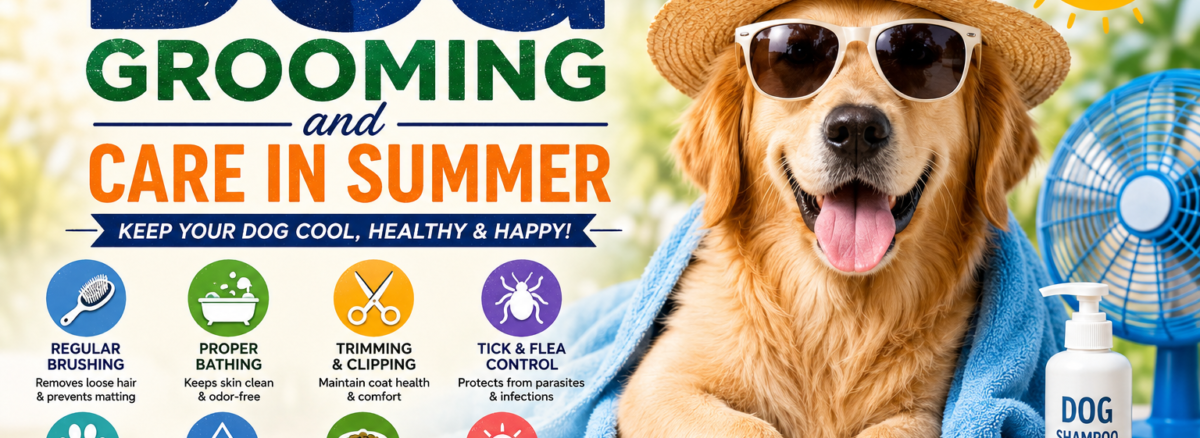
Summer can be a fun season for dogs, but rising temperatures, humidity, and increased outdoor activity can also create several health and grooming challenges. As pet parents, it is important to understand how to keep our dogs comfortable, clean, hydrated, and protected during the hotter months. Proper grooming and seasonal care not only improve your dog’s appearance but also help prevent skin infections, heat stress, dehydration, tick infestations, and other summer-related problems.
- Importance of Summer Grooming
During summer, dogs tend to sweat minimally through their paw pads and regulate body temperature mainly by panting. Excess fur, poor hygiene, and matted coats can trap heat and moisture, making them uncomfortable and more prone to skin diseases.
Regular grooming during summer helps in:
- Removing loose hair and dead skin
- Improving air circulation through the coat
- Reducing shedding inside the house
- Preventing matting and fungal infections
- Detecting ticks, fleas, wounds, or skin problems early
- Keeping the dog cool and comfortable
Different breeds require different grooming approaches. Long-haired breeds like Shih Tzu, Golden Retriever, and Lhasa Apso usually need more frequent brushing compared to short-haired breeds.
- Brushing the Coat Regularly
Brushing is one of the simplest yet most effective grooming practices during summer. Daily or alternate-day brushing helps remove dirt, loose fur, and tangles.
Benefits of brushing include:
- Preventing mat formation
- Reducing shedding
- Stimulating healthy skin oils
- Improving blood circulation
- Allowing early detection of ticks and skin lesions
Use grooming tools suitable for your dog’s coat type. Slicker brushes work well for long-haired breeds, while rubber brushes are useful for short-coated dogs.
Never ignore mats in the fur. Matted hair traps sweat and moisture, creating an ideal environment for bacterial and fungal growth.
- Bathing During Summer
Dogs generally require more frequent bathing during summer because of sweating, dust exposure, and outdoor activities. Bathing helps maintain skin hygiene and reduces foul odor.
However, overbathing should be avoided because it can strip natural oils from the skin and lead to dryness or irritation.
Bathing Tips:
- Bathe your dog once every 2–4 weeks depending on coat type and lifestyle
- Use lukewarm or cool water
- Always use dog-specific shampoos
- Dry the coat thoroughly after bathing
- Avoid harsh human soaps or detergents
Dogs prone to skin infections may benefit from medicated shampoos containing ingredients like Ketoconazole or Chlorhexidine under veterinary guidance.
- Hair Trimming and Clipping
Many pet parents assume shaving the entire coat during summer helps dogs stay cooler. In reality, complete shaving is not recommended for most breeds because the coat also protects against sunburn and heat.
Instead:
- Opt for light trimming and coat thinning
- Keep paw hair and sanitary areas clean
- Trim hair around the ears to improve ventilation
Double-coated breeds should never be shaved completely unless advised medically.
Professional grooming every 4–8 weeks can help maintain coat health and comfort during summer.
- Tick and Flea Control
Summer is the peak season for ticks and fleas. These parasites can cause itching, skin allergies, anemia, and transmission of serious diseases such as babesiosis and ehrlichiosis.
Pet parents should:
- Check the coat daily after walks
- Inspect hidden areas like ears, neck, armpits, and between toes
- Use veterinarian-recommended tick preventives
- Keep bedding and surroundings clean
Maintaining proper grooming significantly reduces parasite infestation risk.
- Paw and Ear Care
Paw Care
Hot roads and pavements can burn your dog’s paw pads during summer.
Important precautions:
- Avoid walks during peak afternoon heat
- Walk dogs early morning or evening
- Clean paws after outdoor walks
- Check for cracks, wounds, or foreign materials
Ear Care
Humidity and moisture increase the risk of ear infections, especially in floppy-eared breeds like Cocker Spaniel and Labrador Retriever.
Signs of ear problems include:
- Head shaking
- Ear odor
- Excess wax
- Redness or itching
Clean ears gently using veterinary ear-cleaning solutions and never insert deep cotton buds.
- Hydration and Cooling
Hydration is extremely important during summer. Dogs can become dehydrated quickly, especially after exercise.
Ways to Keep Dogs Cool:
- Provide fresh clean water at all times
- Keep multiple water bowls in the house
- Offer shaded resting areas
- Use cooling mats or fans
- Avoid excessive exercise during daytime
- Provide electrolyte support if advised by a veterinarian
Some pet parents also offer homemade frozen treats made with curd or dog-safe fruits in moderation.
- Summer Nutrition
Dogs may eat slightly less during extremely hot weather. Light and easily digestible diets are often better tolerated.
Helpful dietary practices include:
- Feeding during cooler parts of the day
- Providing balanced nutrition
- Including adequate protein and vitamins
- Avoiding spoiled food exposure
Fresh food and clean drinking water should always be available.
- Recognizing Heat Stress
Heat stroke is a life-threatening emergency in dogs and every pet parent should know the warning signs.
Symptoms of Heat Stress:
- Excessive panting
- Drooling
- Weakness
- Vomiting
- Bright red tongue or gums
- Collapse or seizures
If heat stroke is suspected:
- Move the dog to a cool shaded area immediately
- Offer cool water
- Use wet towels on paws and body
- Seek urgent veterinary care
Flat-faced breeds like Pug and Bulldog are more prone to heat stress.
- Emotional Care and Comfort
Summer grooming is not only about physical cleanliness but also about emotional well-being. Gentle grooming sessions strengthen the bond between pets and owners. Reward-based grooming using treats and praise can help dogs enjoy the process and reduce anxiety.
Conclusion
Summer care for dogs requires a combination of proper grooming, parasite control, hydration, nutrition, and environmental management. Regular brushing, controlled bathing, tick prevention, and protection from excessive heat can greatly improve your dog’s comfort and health during the season.
As responsible pet parents, observing your dog carefully and maintaining a seasonal care routine can help prevent many common summer problems. A clean, cool, hydrated, and well-groomed dog is not only healthier but also happier throughout the summer months.