
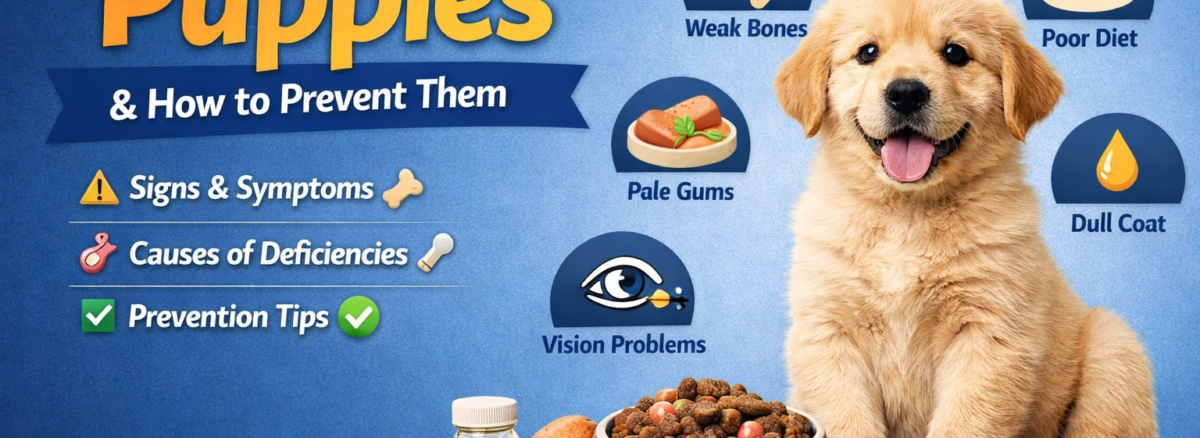
Bringing a puppy home is pure joy—tiny paws, playful zoomies, and endless cuddles. But as a pet parent, one of the biggest responsibilities we carry is making sure our puppy grows up healthy and strong. Puppies grow fast, and during this phase, nutrition plays a bigger role than genetics in shaping their bones, immunity, skin, coat, and overall wellbeing.
Many health problems seen in puppies are not due to disease but due to nutritional deficiencies, especially when feeding is unbalanced, home-made without guidance, or unsuitable for growth. Here are the most common nutritional deficiencies in puppies, explained simply, along with practical ways you can prevent them.
-
1. Protein Deficiency – “Why isn’t my puppy growing well?”
Protein is the building block of your puppy’s body. It helps in muscle growth, immunity, skin repair, and overall development.
Why it happens:
As pet parents, we often feed diluted milk, rice with gravy, or adult dog food thinking it’s “light” or “safe.” Unfortunately, these diets are low in quality protein for a growing puppy.
What you may notice:
- Slow growth compared to littermates
- Thin body, weak muscles
- Frequent illness
- Dull coat and low energy
How to prevent it:
- Feed a puppy-specific diet, not adult dog food
- Ensure the food contains good animal protein (chicken, fish, egg)
- Avoid only milk-based or cereal-heavy diets after weaning
-
2. Calcium & Phosphorus Deficiency – “Why are my puppy’s legs bending?”
This is one of the most common and most dangerous deficiencies seen in puppies, especially large breeds.
Why it happens:
Feeding only meat, vegetarian food, or home diets without mineral balance. Sometimes, even wrong supplementation causes imbalance.
What you may notice:
- Bowed or crooked legs
- Difficulty standing or walking
- Swollen joints
- Delayed teething
How to prevent it:
- Maintain the right calcium-to-phosphorus ratio
- Do not give calcium syrup blindly
- Feed balanced puppy food that meets **AAFCO growth guidelines
- If home-feeding, use vet-recommended calcium–phosphorus supplements
⚠️ Remember: Too much calcium is just as harmful as too little.
-
3. Vitamin D Deficiency – “Good calcium but still weak bones?”
Vitamin D helps the body absorb calcium properly. Unlike humans, puppies cannot make enough Vitamin D from sunlight.
Why it happens:
Low-quality diets or only home-made food without vitamin fortification.
What you may notice:
- Weak bones
- Bone pain
- Poor growth
- Rickets in severe cases
How to prevent it:
- Feed fortified puppy food
- Avoid only milk or cereal-based diets
- Supplement Vitamin D only if advised by your veterinarian
-
4. Iron Deficiency (Anemia) – “Why are my puppy’s gums pale?”
Iron is essential for making healthy blood that carries oxygen.
Why it happens:
Common in puppies with worm infestation, orphan pups, or those fed milk-only diets for too long.
What you may notice:
- Pale gums and tongue
- Weakness and tiredness
- Poor appetite
- Stunted growth
How to prevent it:
- Start deworming from 2 weeks of age
- Introduce solid puppy food at the right time
- Avoid iron supplements unless prescribed
-
Iron is essential for making healthy blood that carries oxygen. Why it happens: Common in puppies with worm infestation, orphan pups, or those fed milk-only diets for too long. What you may notice: • Pale gums and tongue • Weakness and tiredness • Poor appetite • Stunted growth How to prevent it: • Start deworming from 2 weeks of age • Introduce solid puppy food at the right time • Avoid iron supplements unless prescribed
Iron is essential for making healthy blood that carries oxygen.
Why it happens:
Common in puppies with worm infestation, orphan pups, or those fed milk-only diets for too long.
What you may notice:
- Pale gums and tongue
- Weakness and tiredness
- Poor appetite
- Stunted growth
How to prevent it:
- Start deworming from 2 weeks of age
- Introduce solid puppy food at the right time
- Avoid iron supplements unless prescribed
-
6. B-Complex Vitamin Deficiency – “My puppy eats poorly and looks dull”
B vitamins are needed for energy, appetite, nerves, and skin.
Why it happens:
Stress, illness, prolonged antibiotics, diarrhea, or poor-quality food.
What you may notice:
- Poor appetite
- Weakness
- Dull coat
- Mouth sores or nervous signs
How to prevent it:
- Feed complete puppy food
- Supplement B-complex during stress, vaccination, or illness (as advised)
-
7. Essential Fatty Acid Deficiency – “Why is the coat not shiny?”
Omega-3 and omega-6 fatty acids are vital for brain development, skin health, and immunity.
Why it happens:
Low-fat diets or food lacking good oils.
What you may notice:
- Dry, flaky skin
- Dull coat
- Poor learning and slow development
How to prevent it:
- Use puppy food with balanced fats
Add fish oil or omega supplements if recommended
-
Simple Rules Every Pet Parent Should Follow
- Puppies are not small adult dogs—feed puppy food only
- Avoid guesswork with home-made diets
- Do not over-supplement vitamins and minerals
- Deworm and vaccinate on schedule
- Monitor leg shape, weight gain, and activity
Regular vet check-ups during growth are crucial
-
Final Thoughts
As pet parents, our love shows most clearly in how we feed and care for our puppies. Nutritional deficiencies may look small at first, but they can cause lifelong problems if ignored. The safest approach is a balanced, growth-formulated puppy diet, supported by timely veterinary guidance.
Healthy nutrition today means a strong, active, happy dog tomorrow 🐾💙
Share This Post