
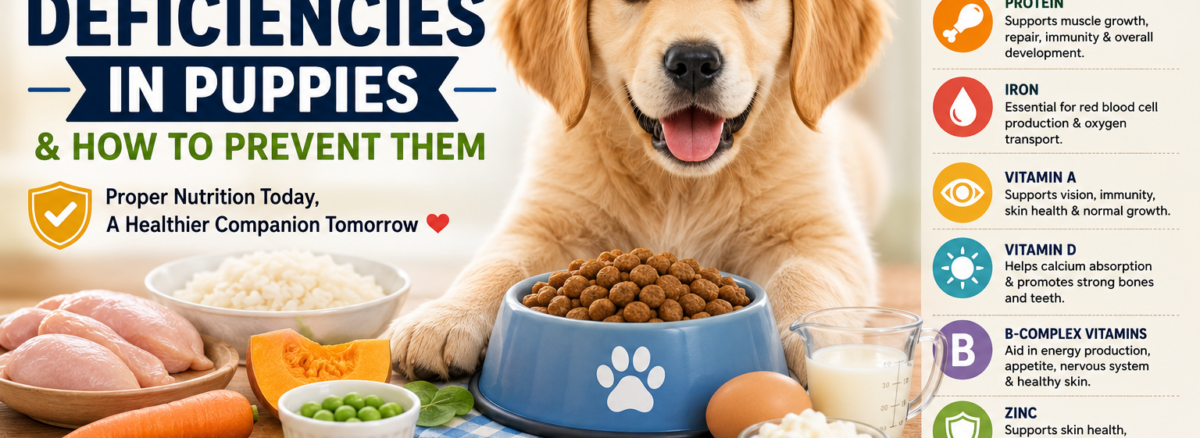
Bringing home a new puppy is an exciting experience. As pet parents, we all want our puppies to grow into healthy, active, and happy dogs. Proper nutrition during the first year of life plays a crucial role in supporting growth, immunity, bone development, brain function, and overall well-being. Unfortunately, nutritional deficiencies are still common in puppies, especially when diets are unbalanced, homemade without proper supplementation, or when puppies are fed inappropriate foods. Understanding these deficiencies and knowing how to prevent them can help ensure your puppy gets the best start in life.
1.Calcium and Phosphorus Deficiency
Calcium and phosphorus are essential minerals for strong bones and teeth. Growing puppies require the right balance of these minerals to support proper skeletal development. A deficiency can lead to weak bones, delayed growth, lameness, and an increased risk of fractures.
Many pet parents unknowingly create imbalances by feeding only meat-based diets. While meat contains phosphorus, it is relatively low in calcium, resulting in an improper calcium-to-phosphorus ratio.
How to Prevent It:
- Feed a complete and balanced puppy food formulated for growth.
- Avoid feeding only meat, rice, or homemade diets without veterinary guidance.
- Consult a veterinarian before adding calcium supplements, as excessive calcium can also be harmful, particularly in large-breed puppies.
2. Protein Deficiency
Protein is the building block of muscles, organs, skin, hair, and the immune system. Puppies require more protein than adult dogs because they are growing rapidly.
Signs of protein deficiency may include poor growth, muscle wasting, dull coat, low energy levels, and weakened immunity.
How to Prevent It:
- Choose a high-quality puppy food with adequate animal-based protein sources.
- Ensure your puppy receives a diet specifically designed for puppies rather than adult dog food.
- Avoid excessive reliance on low-protein table scraps.
3. Iron Deficiency
Iron is necessary for the production of hemoglobin, which carries oxygen throughout the body. Puppies suffering from iron deficiency may develop anemia.
Common signs include:
- Pale gums
- Weakness
- Fatigue
- Poor appetite
- Reduced growth
Young puppies with heavy parasite infestations such as hookworms are particularly vulnerable to iron deficiency.
How to Prevent It:
- Follow a regular deworming schedule recommended by your veterinarian.
- Feed nutritionally balanced puppy diets containing adequate iron.
- Seek veterinary attention if your puppy appears weak or has pale gums.
4. Vitamin A Deficiency
Vitamin A supports vision, skin health, immunity, and normal growth. Deficiency is uncommon in puppies fed commercial diets but may occur in poorly balanced homemade diets.
Signs may include:
- Poor growth
- Skin problems
- Increased susceptibility to infections
- Vision-related issues
How to Prevent It:
- Feed a complete puppy diet containing appropriate vitamin levels.
- Avoid creating homemade diets without nutritional balancing.
- Never supplement excessively, as too much vitamin A can also be harmful.
5. Vitamin D Deficiency
Vitamin D helps regulate calcium and phosphorus absorption, making it critical for bone development. Puppies with inadequate vitamin D may develop weak bones and skeletal abnormalities.
Unlike humans, dogs cannot produce sufficient vitamin D through sunlight alone and must obtain it from their diet.
How to Prevent It:
- Feed a balanced puppy food formulated to meet growth requirements.
- Avoid homemade diets lacking proper vitamin supplementation.
- Consult your veterinarian before using vitamin supplements.
6. B-Complex Vitamin Deficiency
B vitamins are involved in energy production, nervous system function, appetite regulation, and healthy skin.
Deficiencies may result in:
- Poor appetite
- Weight loss
- Weakness
- Skin disorders
- Neurological abnormalities
Puppies experiencing prolonged digestive disturbances may be at higher risk of B-vitamin deficiencies.
How to Prevent It:
- Provide a nutritionally complete puppy diet.
- Address chronic diarrhea or digestive issues promptly.
- Avoid restrictive feeding practices that eliminate essential nutrients.
7. Zinc Deficiency
Zinc plays an important role in skin health, wound healing, immunity, and growth. Although uncommon, zinc deficiency can occur in rapidly growing puppies or those fed poorly balanced diets.
Signs may include:
- Hair loss
- Dry, scaly skin
- Delayed wound healing
- Poor growth
How to Prevent It:
- Feed a high-quality, balanced puppy food.
- Avoid excessive supplementation of other minerals that may interfere with zinc absorption.
- Seek veterinary advice if skin problems persist.
The Role of Balanced Nutrition
One of the most common mistakes pet parents make is assuming that puppies can thrive on the same foods humans eat. While occasional treats are acceptable, puppies have unique nutritional requirements that differ significantly from adult dogs and humans.
A complete and balanced puppy diet provides the right amounts of proteins, fats, vitamins, minerals, and essential nutrients needed for healthy growth. Regular veterinary check-ups, timely deworming, vaccinations, and monitoring your puppy’s weight and development are equally important.
Final Thoughts
As pet parents, nutrition is one of the greatest gifts we can provide our puppies. Most nutritional deficiencies are entirely preventable through proper feeding practices and routine veterinary care. By choosing a balanced puppy diet and avoiding nutritional shortcuts, you can support healthy bones, strong immunity, optimal growth, and a happy future for your furry companion. Investing in good nutrition today will help your puppy enjoy a healthier and more active life for years to come.