
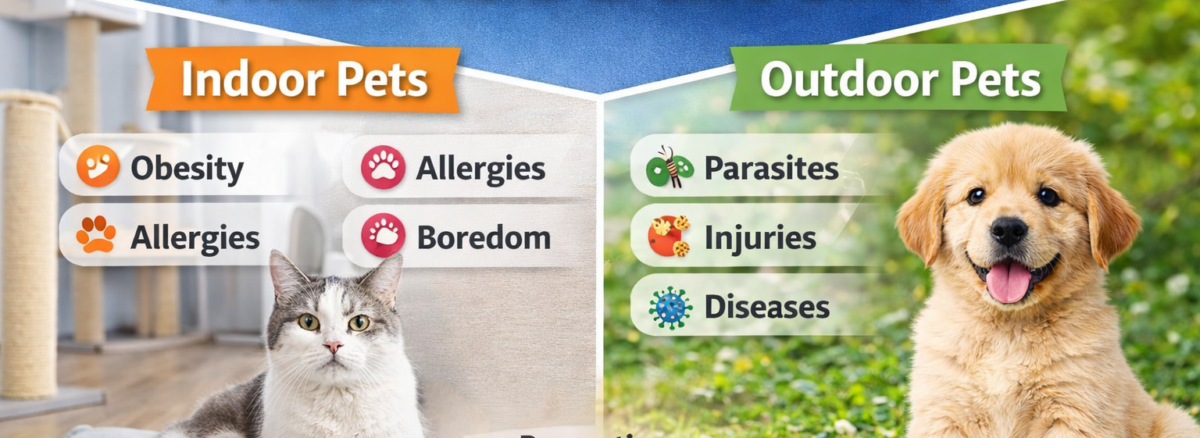
Every pet parent eventually faces this question: Should a pet live mostly indoors, or should it enjoy the outdoors?
Both lifestyles offer benefits, but each comes with specific health challenges. Understanding these differences helps in making better care decisions and ensuring a long, healthy life for our furry companions.
Indoor pets are protected from road accidents, harsh weather, street fights, and many contagious diseases. The home provides security, comfort, and controlled feeding. However, indoor living presents its own health challenges.
-
1. Obesity & Sedentary Lifestyle
Limited physical activity often leads to weight gain. Obesity increases the risk of:
- Joint disorders
- Diabetes
- Cardiac stress
- Reduced life expectancy
Care Tip:
Daily play sessions, structured walks, interactive toys, and portion-controlled feeding help maintain ideal body condition. Monitoring body condition score regularly is essential.
-
2. Behavioral & Mental Health Issues
Boredom can trigger excessive barking, destructive chewing, furniture scratching, or anxiety-related behaviors. Mental stimulation is equally important as physical activity.
Care Tip:
- Puzzle feeders
- Rotational toys
- Training sessions
- Social bonding time
Environmental enrichment prevents frustration and supports emotional well-being.
-
3. Indoor Allergies & Skin Problems
Dust, cleaning chemicals, and indoor pollutants may cause itching, sneezing, or recurrent skin irritation.
Care Tip:
Maintaining hygiene, using pet-safe disinfectants, proper ventilation, and regular grooming reduces allergen load.
-
4. Limited Natural Stimulation
Indoor pets may miss out on varied smells, textures, and exploration that support cognitive health.
Care Tip:
Safe balcony time, window perches, or supervised outdoor exposure enhance environmental enrichment.
Outdoor Pets: Natural Stimulation, Higher Health Risks
Outdoor pets benefit from natural exercise, fresh air, and sensory stimulation. Physical fitness is often better compared to strictly indoor pets. However, exposure to environmental hazards increases health risks.
-
1. Parasite Infestations
Outdoor exposure significantly raises the chances of:
- Ticks
- Fleas
- Intestinal worms
- Mange
Heavy infestations may lead to anemia, skin infections, or systemic illness.
Care Tip:
Monthly tick and flea prevention, routine deworming, and coat inspection after walks are crucial preventive measures.
-
2. Infectious Diseases
Outdoor pets are more likely to encounter pathogens such as:
- Rabies
- Parvovirus
- Distemper
- Leptospirosis
Vaccination becomes non-negotiable for protection.
Care Tip:
Strict adherence to vaccination schedules and timely boosters ensures immunity against life-threatening diseases.
-
3. Injuries & Accidents
Free roaming increases risks of:
- Road traffic accidents
- Dog fights
- Sharp object injuries
- Toxic ingestion
Care Tip:
Leash-controlled walks, secure fencing, ID tags, and microchipping improve safety.
-
4. Weather-Related Stress
Extreme heat or cold directly affects outdoor pets. In tropical climates, heatstroke is a serious concern.
Care Tip:
Provide shaded rest areas, constant access to clean water, and avoid midday outdoor activity during hot seasons.
-
Preventive Healthcare: The Common Foundation
Whether a pet stays indoors or enjoys outdoor access, preventive care remains essential:
- Regular veterinary check-ups
- Timely vaccination
- Routine deworming
- Balanced nutrition
- Dental hygiene
- Grooming and skin monitoring
In regions with warm climates and high stray animal populations, even indoor pets benefit from parasite prevention and core vaccinations.
-
The Balanced Approach
A growing number of pet parents prefer a controlled combination of both worlds:
- Indoor safety for rest and feeding
- Supervised outdoor walks for exercise and stimulation
- Structured enrichment inside the home
- Strong preventive healthcare measures
A healthy pet is not defined by indoor or outdoor status alone. Health depends on nutrition, activity, emotional bonding, preventive medicine, and safe environmental exposure.
Ultimately, responsible pet parenting means creating a lifestyle that combines safety, stimulation, medical protection, and love — ensuring pets thrive physically, mentally, and emotionally in any setting.
Share This Post