
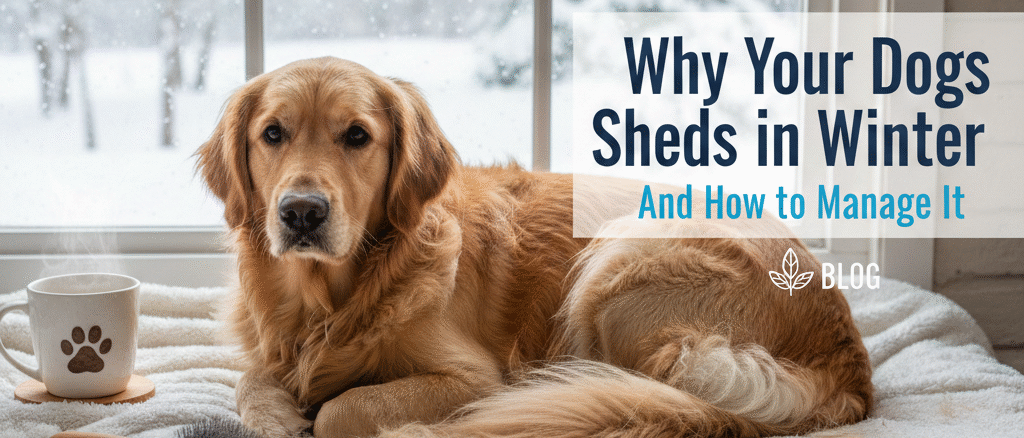
If you’ve ever looked around your home in winter and wondered, “Why is my dog shedding so much now?” — you’re not alone. Many pet parents assume shedding is mainly a summer issue, but in reality, winter can trigger just as much (or even more) coat loss in dogs. Understanding why this happens can help you manage shedding better, support your dog’s skin and coat health, and keep your home cleaner too.
Let’s break it down in the simplest, most practical way.
-
1. Shedding Is Natural — But Winter Changes the Pattern
Dogs don’t shed because they are unhealthy. They shed because their bodies are constantly replacing old hair with new hair.
But what many people don’t know is that shedding is influenced by light exposure, not temperature. This is called the photoperiod — the amount of daylight your dog is exposed to.
During winter:
- Days become shorter
- Sunlight exposure decreases
- Indoor heating increases dryness
- Dogs stay indoors more
These changes tell your dog’s body:
“Time to adjust the coat!”
As the coat adapts, older or damaged hairs fall out, leading to noticeable shedding.
-
2. The Winter Coat Cycle: What’s Actually Happening?
Many dogs develop a dense winter coat in late autumn. This is especially common in double-coated breeds like:
- German Shepherds
- Golden Retrievers
- Huskies
- Labradors
- Pomeranians
- Shih Tzus and Lhasas
This thicker coat helps protect them from cold weather, even if they mostly live indoors.
But once winter sets in:
- a) They shed the weaker hairs to make space for stronger winter coat hair shafts.
This is often seen as “extra shedding” around November–January.
- b) Indoor heating dries the skin.
Dry skin = irritation = more scratching = more hair fall.
- c) Artificial lighting confuses the natural shedding cycle.
With lights on till late night, dogs may shed irregularly throughout winter because their body thinks the day is longer.
So the shedding isn’t because your dog is unhealthy — it’s because the coat is adjusting to new indoor-winter conditions.
-
3. When Is Winter Shedding Normal vs Not Normal?
Normal Winter Shedding
✔ Even shedding throughout the body
✔ No bald spots
✔ No red skin or dandruff
✔ Dog is active and comfortable
✔ Coat still feels healthy and soft
Abnormal Shedding — Time to Pay Attention
❌ Bald patches
❌ Strong itching
❌ Scabs or dandruff
❌ Foul smell from coat
❌ Sudden hair loss around eyes, ears or tail base
❌ Patchy thinning
These may indicate:
- Flea allergy
- Mites
- Fungal infection (like ringworm)
- Hypothyroidism
- Poor nutrition
- Stress
- Shampoo reactions
If you see these changes, a vet visit is important.
-
4. Key Reasons Dogs Shed More in Winter
Reason 1: Dry Indoor Air
Room heaters reduce humidity, leading to:
- Dry skin
- Flaking
- More loose hairs
Reason 2: Less Sunlight
Shorter days cause hormonal changes that trigger coat shedding.
Reason 3: Lack of Omega Fatty Acids
Many dogs experience dull, brittle coats in winter because their diet lacks essential fatty acids.
Reason 4: Stress and Less Outdoor Activity
Some dogs experience mild winter stress, leading to increased shedding.
Reason 5: Switching Between Hot and Cold Environments
Moving from warm indoors to cold outdoors repeatedly can weaken hair shafts.
-
5. How to Manage Winter Shedding (Simple & Practical Tips)
Here are pet-parent–friendly steps to reduce shedding and keep your dog comfortable all winter.
Tip 1: Brush Frequently (Daily for Heavy Shedders)
Brushing removes loose hairs before they fall all over the house. It also stimulates blood flow and distributes natural oils, improving coat health.
Recommended tools:
- Slicker brush for most breeds
- Deshedding rake for double-coated dogs
- Grooming gloves for short-coated breeds
Even 5 minutes a day can make a huge difference.
Tip 2: Add Omega-3 and Omega-6 Fatty Acids
Supplements like fish oil, salmon oil, or omega-3 capsules can:
- Reduce shedding by strengthening hair follicles
- Improve skin moisture
- Prevent winter dryness
- Make the coat shiny and soft
These are especially important during winter dryness.
Tip 3: Maintain Proper Hydration
Dogs drink less water in cold weather, leading to dry skin.
Encourage drinking by:
- Offering lukewarm water
- Adding water to meals
- Using wet food occasionally
Hydration directly affects coat quality.
Tip 4: Use a Gentle, Moisturizing Shampoo
Avoid harsh shampoos in winter. Instead, choose:
- Oatmeal shampoo
- Hypoallergenic shampoo
- Moisturizing conditioner
Bathing frequency should be:
- Once in 2-3 weeks, unless recommended otherwise.
More frequent bathing = more dryness = more shedding.
Tip 5: Use a Room Humidifier
A humidifier restores moisture in the air, reducing dryness and flakiness in your dog’s skin.
Even a simple bowl of water near the heater helps maintain humidity.
Tip 6: Provide a Balanced, High-Quality Diet
Proteins, vitamins (A, E, B-complex), and minerals like zinc play a big role in coat health.
Good nutrition = strong hair roots = less shedding.
Tip 7: Regular Vet Check-Ups in Winter
Winter can reveal hidden health issues like:
- Hypothyroidism
- Skin allergies
- Fungal infections
Early detection prevents heavy coat loss.
-
6. When to Worry?
You should consult a vet if:
- Shedding becomes sudden and excessive
- You notice bald spots
- Skin looks red, smelly, or inflamed
- Your dog becomes lethargic or gains weight (sign of thyroid issues)
Winter shedding is normal — but discomfort isn’t.
-
Final Thoughts: Shedding Is Natural, But Manageable
Winter shedding may be surprising, but it’s simply your dog’s body adapting to changing light and temperature. With the right grooming, nutrition, and care, you can significantly reduce shedding and keep your dog’s coat healthy.
A shiny, soft coat always starts with:
- Good brushing
- Healthy diet
- Moisturized skin
- Comfortable indoor environment
When you support your dog’s coat from the inside and outside, winter shedding becomes easy to manage — and your furry friend stays happy, healthy, and cozy all season long.
Share This Post